Rubber tyred gantry (RTG) cranes are essential lifting systems widely used in container terminals, logistics yards, precast concrete plants, steel yards, and large construction sites. Because these cranes vary significantly in design, capacity, steering modes, power systems, and automation levels, understanding their technical specifications is essential for selecting the right model and ensuring safe and efficient operations.
However, RTG technical data sheets can be overwhelming to many buyers, especially first-time purchasers or non-technical procurement teams. This guide explains how to read and interpret rubber tyred gantry crane specifications so you can evaluate models confidently, compare suppliers accurately, and choose equipment that truly meets your operational requirements.
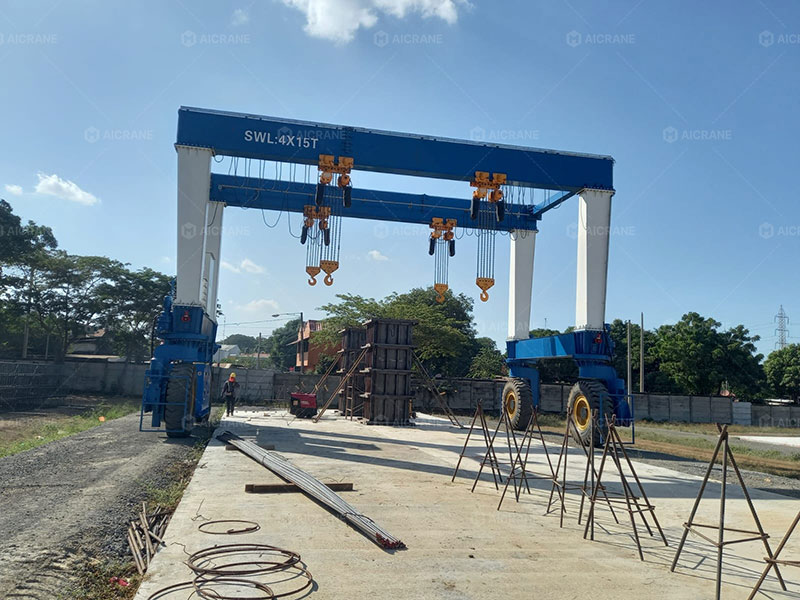
1. Start With the Basic Crane Parameters
The first step in reading an RTG technical specification sheet is to understand the basic physical and capacity parameters. These directly influence lifting performance, operational flexibility, and investment cost.
Lifting Capacity
The lifting capacity (often 35-50 tons for container RTGs, and 50-500 ton gantry cranes for industrial RTGs) indicates the maximum permissible load. When reading capacity specs, note:
-
Rated Capacity Under Spreader vs. Under Hook
Container RTGs normally specify lifting capacity under spreader, while industrial RTGs may specify under hook. -
With or Without Load Spreader Weight
Some suppliers include the spreader weight in capacity; others do not. Clarify this to avoid misunderstanding.
Span (Distance Between Wheelsets)
Span determines how many lanes, container rows, or material storage rows the crane can straddle.
For container terminals, common spans include 22m, 23.5m, 26m, matching 6–8 container rows.
For industrial applications, spans vary widely depending on material yard size.
Lifting Height
Lifting height is usually expressed as “1 over 5”, “1 over 6”, or similar for container cranes, meaning:
-
1 container over 5 containers high
-
1 container clearance + 5 stacked below
In industrial RTGs, lifting height is given in meters.
Wheel Base
The wheelbase affects stability and turning radius. A larger wheelbase typically provides better stability but requires wider working space.
Understanding these fundamental parameters helps you quickly determine whether a crane is physically suitable for your site layout.
2. Understand Hoist, Trolley, and Gantry Travel Specifications
RTG cranes operate through three main motions: lifting, trolley travel, and gantry travel. Each motion has specs you must interpret correctly.
Hoisting System Specifications
Key parameters include:
-
Hoisting speed (m/min)
Faster hoisting enables higher productivity but may increase energy consumption and wear. -
Hoist motor power
Typically ranges from 100–200 kW depending on capacity. -
Hoist mechanism type
-
Traditional wire rope hoist
-
European-standard hoist
-
High-efficiency inverter-controlled hoist
-
Trolley Travel Specifications
Important details:
-
Travel speed (often 50–80 m/min)
-
Drive motor power
-
Type of trolley:
-
Rope-driven
-
Motor-driven
-
Anti-sway system capability
-
The trolley structure influences cycle times and operational smoothness.
Gantry Travel Specifications
This section covers:
-
Gantry travel speed – usually 90–130 m/min
-
Motor power and number of motors per side
-
Wheel type and surface pressure
-
Traction control systems
-
Anti-skid or automatic steering correction
These specs determine how smoothly and safely the crane moves while carrying containers or heavy materials.
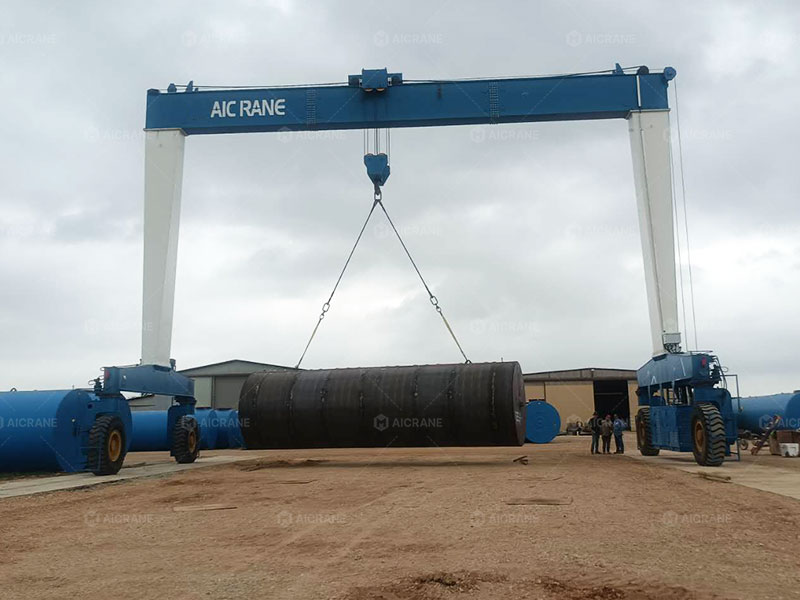
3. Analyze Steering Mode Specifications (Unique to RTG Cranes)
One of the defining characteristics of RTG rubber wheeled gantry cranes is their multiple steering modes, which determine maneuverability and space utilization. Technical specifications typically list modes such as:
1. 0° Steering (Straight Travel)
Used for forward and backward gantry travel.
2. ±90° Steering
RTG moves sideways, enabling lane changes without rails.
3. 180° Steering
Used for rotating the crane in narrow yards.
4. Pivot Turning
Ideal for tight industrial yards or when space is restricted.
5. Diagonal or Crab Steering
Allows diagonal movement, helpful in complex layouts.
Understanding these steering modes is critical when comparing RTGs for flexible container handling or industrial material yards.
4. Interpret Power System Specifications
RTG cranes can be powered by:
1. Diesel Engine (Traditional RTG)
Specs include:
-
Engine model and power rating
-
Fuel consumption
-
Emission standards
-
Noise level
2. Diesel-Electric Hybrid RTG
Specs indicate:
-
Battery capacity
-
Fuel saving percentage
-
Regenerative braking efficiency
3. Fully Electric RTG (E-RTG)
Powered via:
-
Cable reel
-
Busbar
-
Battery-only system
Specs include:
-
Voltage (e.g., 400V/50Hz or 690V/60Hz)
-
Power draw
-
Energy efficiency class
Understanding the power system allows buyers to estimate long-term operational costs and environmental impact.
5. Study the Automation and Control Specifications
Modern RTG cranes can include semi-automated or fully automated functions. Key control-related specs include:
Anti-Sway System
Reduces load swing, improves precision, and enhances safety. Gantry crane specifications show:
-
Type (mechanical, electronic, or hybrid)
-
Control accuracy
-
Response time
Automatic Steering Control
Ensures the crane stays centered in the travel lane.
Remote Diagnosis & Monitoring
Specifications may list:
-
Data communication protocols
-
Support for IoT tracking
-
Preventive maintenance analytics
PLC, Sensors, and Protection Devices
Expect to find details on:
-
Siemens/Schneider PLC brands
-
Laser anti-collision sensors
-
Overload protection
-
Emergency stop systems
-
Wind speed alarms
The control system specifications help evaluate operational safety, operator efficiency, and maintenance convenience.
6. Examine Structural and Mechanical Specifications
This section focuses on the crane’s build quality. Key items include:
Steel Structure Grade
Typically Q235B/Q355B or European S355.
Girders and Legs
Specs include:
-
Girder type (box girder vs welded structure)
-
Leg design (rigid leg + flexible leg combination)
-
Fatigue design life
Wheels and Brakes
Read details on:
-
Wheel diameter
-
Wheel material (for abrasion resistance)
-
Hydraulic or electric brakes
-
Wheel load distribution
Wind Resistance
Includes:
-
Maximum working wind speed
-
Maximum survival wind speed
-
Storm protection devices
High wind resistance is essential for outdoor RTG cranes.
7. Compare Accessory and Optional Specifications
RTG cranes often offer optional features such as:
-
Spreader type (fixed, telescopic, rotating)
-
Cabin or remote operation
-
LED floodlight system
-
Camera monitoring system
-
GPS and container alignment systems
-
Emergency steering pump
Understanding optional features helps customize the crane to your application.
8. Evaluate Compliance and Standards
Key standards listed in the specification sheet include:
-
ISO, FEM, DIN, GB/T structural and mechanical standards
-
IEC electrical standards
-
IFI, CMAA, or other industry norms
Compliance with recognized standards ensures safety and international quality.
Conclusion: Mastering RTG Specifications Leads to Better Purchasing Decisions
Reading and understanding RTG technical specifications is essential for selecting a crane that fits your operational needs, site layout, budget, and long-term efficiency goals. By focusing on core parameters—capacity, span, lifting height, steering modes, power system, control systems, structural design, and safety standards—you can assess equipment accurately, avoid costly misunderstandings, and ensure the crane delivers high performance throughout its service life.